


Google Antigravity 2.25.0
|
Author:
Google
Date: 10/22/26 Size: Size Varies License: Freemium / Subscription Requires: 11|10|Linux|macOS Downloads: 1572 times  TIP:
Click Here to Repair or
TIP:
Click Here to Repair orRestore Missing Windows Files |
Download (EXE) Download (ARM64) Download (Linux) Download (Mac Intel) Download (Mac Apple Silicon)
|
MajorGeeks: Setting the standard for editor-tested, trusted, and secure downloads since 2002. |
 Avast Free Antivirus Worried about finance scams?
Get free antivirus with AI-powered online scam detection Download Free!
Google Antigravity is an innovative software development tool and a cutting-edge integrated development environment (IDE). It utilizes artificial intelligence to enable users to create software by directing autonomous AI agents, eliminating the need to write every line of code manually. This technological advancement streamlines the development process, making it more efficient and accessible to developers.
Developed by Google, this innovative platform aims to transform the traditional software development process by leveraging autonomous AI agents to enable seamless, rapid coding workflows. At its core, Google Antigravity enables developers to build applications more efficiently through AI-driven workflows. Thanks to its foundation on Google's advanced Gemini models, including the latest iteration, Gemini 3, the platform not only enhances coding efficiency but also supports a variety of third-party AI models. This flexibility enables developers to delegate intricate and comprehensive coding tasks to AI agents, freeing them to focus on higher-level design and problem-solving.
The platform serves as a central hub for managing the work of multiple AI agents simultaneously. This asynchronous orchestration feature allows developers to move beyond conventional linear task management. For instance, while one agent is refactoring code, another can independently run test scripts, working in parallel to maximize productivity.
Google Antigravity features Browser Control & Testing, which includes a sandbox browser for AI agents to launch applications and navigate the DOM. This allows them to mimic user actions, such as clicking buttons and entering data, to test interfaces in a controlled environment.
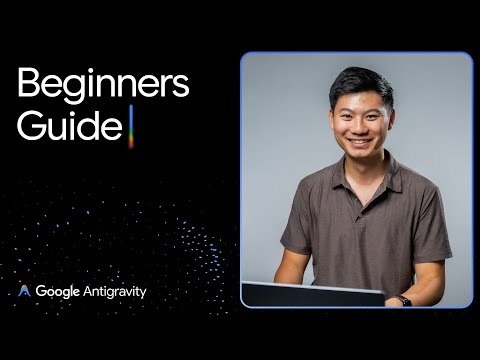
Moreover, rather than merely presenting a series of raw tool calls, the AI in Google Antigravity generates tangible outputs called Artifacts. These Artifacts may include implementation plans, detailed walkthroughs, and screenshots depicting the project's progression. This feature enhances transparency and allows developers to review and verify AI-generated work, ensuring quality and alignment with project specifications.
To further enhance its utility, the platform integrates with various systems and offers Software Development Kits (SDKs). It supports Model Context Protocol (MCP) servers, enabling advanced model interactions. Additionally, it provides voice-to-text prompting, a Command Line interface (CLI), and customization options for enterprise-level implementations or personal use. This flexible architecture enables developers to tailor the platform to their specific needs, fostering a highly adaptive and powerful development environment.
Pros:
● Agentic Workflows let you manage several AI agents at the same time, including those that code, refactor, and review.
● Browser Integration means that it has a built-in Chrome tool. This tool can open your app on localhost, mimic user actions, find issues in the website’s code, and send any errors directly to you.
● Model Switching lets you easily switch between models like Gemini, Claude, and Opus. This way, you can find the best option for your task.
Fast prototyping provides an efficient way to create small and simple web apps or games from the ground up.
Cons:
● Heavy Resource Usage
● Strict quotas mean that if you reach the free or premium usage limits, you may be locked out of certain models until the quota resets.
Google Antigravity, a cutting-edge, AI-powered code editor that revolutionizes prototyping and enhances multi-agent workflows! Although it stands out as an incredibly powerful tool, it's worth noting that it comes with significant drawbacks, particularly in resource and memory consumption.
What is Antigravity and What Does it Do?
Developed by Google, this innovative platform aims to transform the traditional software development process by leveraging autonomous AI agents to enable seamless, rapid coding workflows. At its core, Google Antigravity enables developers to build applications more efficiently through AI-driven workflows. Thanks to its foundation on Google's advanced Gemini models, including the latest iteration, Gemini 3, the platform not only enhances coding efficiency but also supports a variety of third-party AI models. This flexibility enables developers to delegate intricate and comprehensive coding tasks to AI agents, freeing them to focus on higher-level design and problem-solving.
The platform serves as a central hub for managing the work of multiple AI agents simultaneously. This asynchronous orchestration feature allows developers to move beyond conventional linear task management. For instance, while one agent is refactoring code, another can independently run test scripts, working in parallel to maximize productivity.
Sandbox Browser and More
Google Antigravity features Browser Control & Testing, which includes a sandbox browser for AI agents to launch applications and navigate the DOM. This allows them to mimic user actions, such as clicking buttons and entering data, to test interfaces in a controlled environment.
▶
Moreover, rather than merely presenting a series of raw tool calls, the AI in Google Antigravity generates tangible outputs called Artifacts. These Artifacts may include implementation plans, detailed walkthroughs, and screenshots depicting the project's progression. This feature enhances transparency and allows developers to review and verify AI-generated work, ensuring quality and alignment with project specifications.
System Integration, SDKs, and CLI
To further enhance its utility, the platform integrates with various systems and offers Software Development Kits (SDKs). It supports Model Context Protocol (MCP) servers, enabling advanced model interactions. Additionally, it provides voice-to-text prompting, a Command Line interface (CLI), and customization options for enterprise-level implementations or personal use. This flexible architecture enables developers to tailor the platform to their specific needs, fostering a highly adaptive and powerful development environment.
Pros and Cons
Pros:
● Agentic Workflows let you manage several AI agents at the same time, including those that code, refactor, and review.
● Browser Integration means that it has a built-in Chrome tool. This tool can open your app on localhost, mimic user actions, find issues in the website’s code, and send any errors directly to you.
● Model Switching lets you easily switch between models like Gemini, Claude, and Opus. This way, you can find the best option for your task.
Fast prototyping provides an efficient way to create small and simple web apps or games from the ground up.
Cons:
● Heavy Resource Usage
● Strict quotas mean that if you reach the free or premium usage limits, you may be locked out of certain models until the quota resets.
Geel Verdict
Google Antigravity, a cutting-edge, AI-powered code editor that revolutionizes prototyping and enhances multi-agent workflows! Although it stands out as an incredibly powerful tool, it's worth noting that it comes with significant drawbacks, particularly in resource and memory consumption.
Version History for Google Antigravity:
https://antigravity.google/changelog
Limitations:
In addition to the free version, there are four plans to choose from, all of which can be viewed here.
 Screenshot for Google Antigravity
Top Downloads In Programming
 Text Editor Pro 37.3.1 [ 2026-10-04 20:03:37 | 10 MB | Freeware | 11|10|8|7 | 5 ] Visual Studio Code 1.143.0 [ 2026-10-21 08:05:48 | 87-237 MB | Open Source | 11|10|8|7|Linux|macOS | 5 ] dnSpy 6.1.8 [ 2020-12-07 16:41:31 | 22.5 MB | Open Source | 11|10|8|7 | 5 ] Ghidra 12.2 [ 2026-09-18 13:50:24 | 544 MB | Open Source | 11|10|8|7|Linux|macOS | 4 ] x64dbg 2026-05-27_12-11 [ 2026-05-27 14:51:18 | 31 MB | Open Source | 11|10|8|7 | 5 ]
 Tactical Briefings
Comment Rules & Etiquette - We welcome all comments from our readers, but any comment section requires some moderation. Some posts are auto-moderated to reduce spam, including links and swear words. When you make a post, and it does not appear, it went into moderation. We are emailed when posts are marked as spam and respond ASAP. Some posts might be deleted to reduce clutter. Examples include religion, politics, and comments about listing errors (after we fix the problem and upvote your comment). Finally, be nice. Thank you for choosing MajorGeeks.

© 2000-2026 MajorGeeks.com
Powered by Contentteller® CMS System